Posts for: #Redis Lock

A series exploring distributed locking with Redis, from single-instance implementations to the Redlock algorithm.

Distributed Lock with Redis - Redlock

Despite the critique in my previous post, I still believe Redlock is a valuable algorithm, both as a practical tool and as an entry point into distributed systems thinking.

In my experience, its theoretical downsides rarely translate into real-world catastrophes. Why? Because engineers who choose Redis typically aren’t betting everything on it. They treat Redis as fast but fallible: a caching layer, a rate limiter. When you design with that mindset, you naturally build in safeguards, such as database unique constraints, idempotency keys, retry-safe operations. The failure modes Kleppmann describes are real, but they’re survivable in systems that don’t assume perfection.
Read more →

Distributed Lock with Redis - Critique

TL;DR: Redis is an AP system, not a CP system. It cannot guarantee strong consistency. For high-concurrency use cases, expect potential data races when using Redis. Consider systems that provide strong consistency (e.g., etcd, ZooKeeper) if you need strict guarantees.

The Single Instance Lock

In the previous post, we explored how to implement a distributed lock using a single Redis instance. We addressed the question: what if the client crashes? But we left one critical question unanswered: what if Redis itself fails?

Read more →

Distributed Lock with Redis - Single Instance

Note: Code examples in this article use Go. The concepts apply to any language.

Why lock at all?

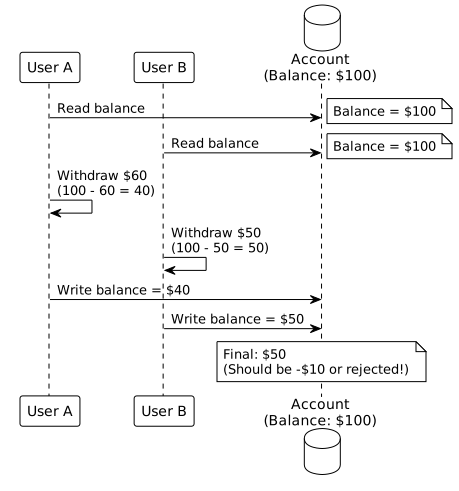
Imagine two users trying to withdraw money from the same bank account simultaneously. Without proper synchronization, both might read the same balance, deduct their amounts independently, and write back—resulting in a lost update. One withdrawal effectively disappears.

This is a classic race condition, the correctness of the outcome depends on the timing of operations.

Read more →